Tesla Robotaxi Arrives in Miami: Why This Expansion Matters More Than Just One New City
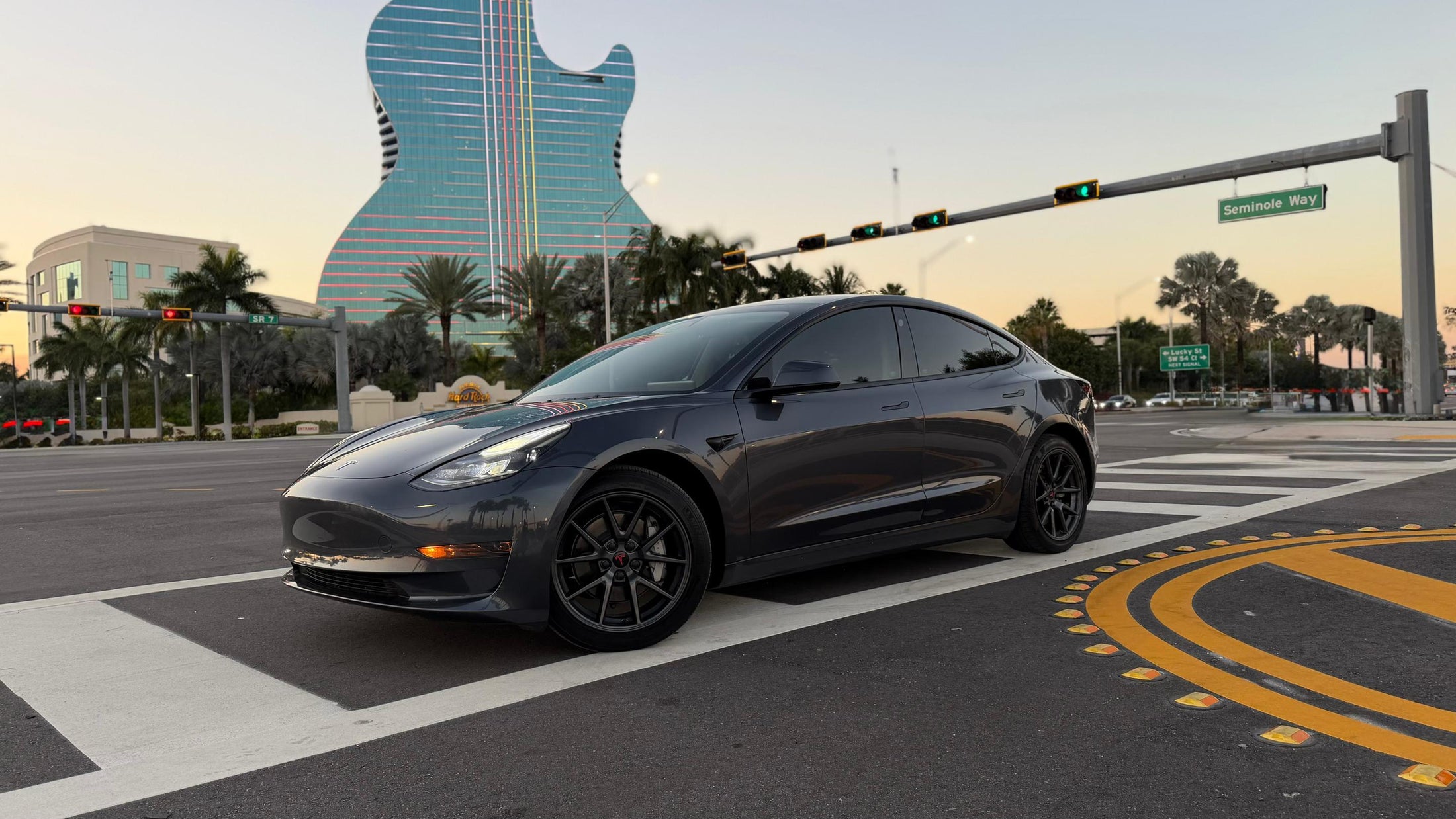
Tesla's Miami Expansion Is About More Than Geography
When Tesla announced that its Robotaxi service would expand to Miami, many headlines focused on a simple fact:
Another city has joined Tesla's autonomous ride-hailing network.
While accurate, that description misses the bigger picture.
Miami is not just another location on Tesla's expansion map.
It represents another real-world testing environment where the company can refine autonomous driving technology, validate operational systems, and gather valuable data under different traffic conditions.
For Tesla, every new city is more than a market.
It is another learning platform.
Rather than measuring success by the number of cities served, Tesla appears focused on improving the quality, reliability, and scalability of its autonomous transportation system.
Why Miami Makes Strategic Sense
At first glance, cities such as New York, Chicago, or Los Angeles might seem like more obvious candidates for Robotaxi expansion.
Miami, however, offers several practical advantages.
The city combines:
- High year-round tourism.
- Busy airport traffic.
- Dense urban districts.
- Suburban neighborhoods.
- Coastal highways.
- Heavy seasonal traffic.
These characteristics create a diverse range of driving scenarios that help autonomous systems encounter both routine and complex situations.
Florida has also become an important region for emerging transportation technologies, providing an environment where companies can continue evaluating advanced mobility solutions while working within evolving regulatory frameworks.
For Tesla, Miami is not simply another destination.
It is another opportunity to expose its AI systems to a wider variety of real-world driving environments.
Robotaxi Expansion Is Much Harder Than Most People Imagine
A common misconception is that once autonomous driving software becomes capable enough, expanding to a new city should be straightforward.
In reality, launching a Robotaxi service involves far more than installing updated software.
Each city presents unique operational challenges.
These include:
- Local traffic patterns.
- Road layouts.
- Construction activity.
- Airport pickup procedures.
- Parking regulations.
- Emergency response protocols.
- Weather conditions.
- Local regulatory requirements.
Even if the underlying AI remains the same, the surrounding operating environment changes significantly from one city to another.
This is why Tesla continues expanding gradually rather than attempting a nationwide launch all at once.
Autonomous Driving Is Only Half the Challenge
Many discussions about Robotaxi focus almost entirely on artificial intelligence.
Can the vehicle recognize pedestrians?
Can it navigate intersections?
Can it respond safely to unexpected obstacles?
These questions are essential.
Yet they represent only part of the overall challenge.
Operating a commercial ride-hailing network requires an entirely different layer of infrastructure.
Tesla must also manage:
- Vehicle dispatch.
- Fleet availability.
- Customer support.
- Maintenance scheduling.
- Remote monitoring.
- Charging logistics.
- Service reliability.
In other words, building autonomous driving software and operating a transportation network are two separate engineering problems.
Success requires solving both.
Why Tesla Expands City by City
Some observers wonder why Tesla's Robotaxi rollout appears slower than expected.
If Full Self-Driving technology continues improving, why not deploy it nationwide immediately?
The answer lies in scalability.
Every city has its own characteristics.
Traffic behavior in Miami differs from Austin.
Road designs differ from San Francisco.
Weather differs from Phoenix.
Even driver behavior varies significantly between regions.
Expanding one city at a time allows Tesla to:
- Collect localized driving data.
- Validate software performance.
- Improve operational procedures.
- Refine fleet management.
- Build confidence before larger deployments.
This incremental approach may appear conservative.
From an engineering perspective, it reduces risk while strengthening long-term scalability.
Tesla Is Testing More Than Driving Technology
Every Robotaxi trip generates far more information than navigation alone.
Tesla can evaluate:
- Passenger pickup efficiency.
- Ride duration.
- Charging utilization.
- Fleet distribution.
- Demand forecasting.
- Vehicle availability.
- Customer experience.
These operational insights become increasingly valuable as the network grows.
The objective is not simply to prove that autonomous driving works.
It is to demonstrate that an autonomous transportation service can operate efficiently at scale.
Data Becomes a Competitive Advantage
Every additional city expands Tesla's understanding of real-world transportation.
Vehicles experience:
- Different road designs.
- Different traffic densities.
- Different driving cultures.
- Different weather patterns.
Each completed trip contributes to improving future software releases.
Unlike traditional mapping projects that rely heavily on manually updating road information, Tesla's fleet continuously generates fresh driving data.
Over time, this creates a feedback loop:
More cities generate more data.
More data improves AI.
Better AI enables broader deployment.
Broader deployment generates even more data.
This cycle may become one of Tesla's strongest long-term competitive advantages.
Robotaxi Is Not Just a Self-Driving Taxi
At first glance, Tesla Robotaxi appears to be another ride-hailing service.
Passengers request a vehicle through an app.
The vehicle arrives.
The passenger reaches their destination.
From the outside, the experience may look similar to existing transportation platforms.
Beneath the surface, however, Tesla is building something fundamentally different.
Traditional ride-hailing companies primarily coordinate drivers and passengers.
Tesla is attempting to integrate every major component of autonomous transportation into a single ecosystem.
That includes:
- Vehicle design.
- AI software.
- Onboard computing.
- Battery technology.
- Charging infrastructure.
- Fleet management.
- Mobile applications.
- Continuous software updates.
Instead of operating one layer of the transportation stack, Tesla is gradually building the entire stack.
Why Tesla's Vertical Integration Matters
Most transportation companies rely heavily on external partners.
One company manufactures vehicles.
Another develops mapping software.
A different supplier produces sensors.
Charging infrastructure comes from someone else.
Fleet maintenance is outsourced.
Tesla takes a different approach.
Many of its critical technologies are developed internally.
This includes:
- Electric powertrains.
- Battery management systems.
- AI hardware.
- Neural network software.
- Vehicle operating systems.
- Charging technology.
- Manufacturing processes.
Because these systems are designed together, improvements in one area often benefit the entire platform.
For example:
More efficient onboard computing reduces energy consumption.
Lower energy consumption extends vehicle range.
Longer range increases the number of rides each vehicle can complete before charging.
Higher vehicle utilization improves overall fleet economics.
This interconnected design is difficult to replicate when multiple suppliers control different parts of the system.
Robotaxi Economics Depend on Utilization
One of the most overlooked aspects of autonomous transportation is utilization.
Privately owned vehicles spend most of their lives parked.
Studies across the automotive industry consistently suggest that personal vehicles remain idle for the overwhelming majority of each day.
That creates an opportunity.
If an autonomous vehicle can operate safely for many more hours each day, its value changes dramatically.
Instead of serving one owner during commuting hours, the same vehicle could complete rides for multiple passengers throughout the day.
Higher utilization can:
- Spread ownership costs across more trips.
- Improve return on vehicle investment.
- Reduce downtime.
- Increase transportation efficiency.
This is one reason Robotaxi attracts so much attention from investors.
The business model has the potential to generate ongoing revenue from a single vehicle rather than relying solely on the initial sale.
Tesla May Be Building a Mobility Platform
Many people describe Robotaxi as a taxi business.
That description understates Tesla's broader ambition.
The company appears to be creating a mobility platform.
Rather than simply selling vehicles, Tesla could eventually connect drivers, passengers, charging infrastructure, software services, and autonomous operations through a unified network.
In that scenario, every additional vehicle strengthens the ecosystem.
More vehicles create:
- Greater service availability.
- More driving data.
- Better AI training.
- Improved route optimization.
- Higher customer convenience.
Network effects begin to emerge.
As the system grows, it becomes increasingly valuable to both riders and Tesla itself.
Why Tesla's Biggest Competitor May Not Be Another Robotaxi Company
Whenever Robotaxi is discussed, comparisons with companies focused exclusively on autonomous ride-hailing naturally arise.
While these comparisons are useful, they may overlook a larger competitive distinction.
Tesla is not simply introducing a transportation service.
It already operates across multiple industries simultaneously.
Its business includes:
- Electric vehicle manufacturing.
- Battery technology.
- Charging infrastructure.
- Artificial intelligence.
- Energy storage.
- Vehicle software.
- Manufacturing automation.
Robotaxi becomes another layer built on top of these existing capabilities.
Because much of the underlying infrastructure already exists, Tesla can potentially expand autonomous transportation while benefiting from investments originally made for other parts of its business.
This systems approach differs from companies that must build every operational layer specifically for autonomous ride-hailing.
Software Turns Vehicles Into Continuously Improving Assets
Traditional vehicles begin depreciating the moment they leave the dealership.
Tesla vehicles follow a somewhat different pattern.
Although physical depreciation still occurs, software updates can continue improving functionality throughout the vehicle's life.
A Robotaxi fleet benefits from this model.
As Tesla releases improvements to perception, navigation, planning, or energy management, every compatible vehicle can potentially receive those enhancements.
Instead of replacing hardware every year, Tesla often improves capability through software.
This creates a fleet that becomes progressively more capable over time without requiring complete vehicle replacement.
That characteristic is particularly valuable for commercial transportation, where operational efficiency directly influences profitability.
Miami Is a Blueprint, Not the Final Destination
From the outside, expanding Robotaxi service into Miami may look like a simple geographic milestone.
In reality, it represents something much more important.
For Tesla, every successful city deployment becomes a blueprint for future expansion.
Launching in one city allows the company to answer critical operational questions:
- How efficiently can vehicles be dispatched?
- How quickly can charging cycles be managed?
- How does demand fluctuate throughout the day?
- Which routes create the highest utilization?
- Where do passengers experience the most friction?
These lessons cannot be fully replicated in simulations.
They require real passengers, real traffic, and real operating conditions.
If Miami proves successful, Tesla gains more than another service area—it gains a repeatable operational model that can be adapted to future cities.
Scaling Robotaxi Is More About Operations Than Technology
Many people assume that the biggest challenge for Robotaxi is making the vehicle drive itself safely.
While that remains essential, scaling the service introduces an entirely different set of challenges.
Imagine expanding from one city to fifty.
Tesla must coordinate:
- Fleet distribution across multiple metropolitan areas.
- Charging infrastructure availability.
- Vehicle maintenance schedules.
- Local regulations and licensing.
- Customer support teams.
- Emergency response procedures.
- Software validation for regional driving conditions.
Each additional city increases operational complexity.
Success will depend not only on autonomous driving capability but also on Tesla's ability to manage a large-scale mobility network with airline-level precision.
Why Expansion Will Likely Remain Gradual
Some observers interpret Tesla's measured rollout as hesitation.
A more realistic explanation is that gradual expansion reduces long-term risk.
Every new city introduces unique variables:
- Different traffic behaviors.
- Local road designs.
- Weather conditions.
- Infrastructure quality.
- Regulatory expectations.
Deploying Robotaxi incrementally allows Tesla to identify unexpected challenges before expanding further.
This engineering-first approach has been consistent throughout Tesla's history.
The company typically prioritizes iterative improvement over rapid, uncontrolled scaling.
Although this strategy may appear slower in the short term, it often creates stronger foundations for sustainable growth.
The Real Opportunity Is Network Scale
The value of Robotaxi is not determined solely by how many rides are completed today.
Its long-term potential lies in network effects.
As more vehicles join the network:
- Passenger wait times can decrease.
- Fleet utilization can improve.
- Route optimization becomes more effective.
- AI systems receive more diverse driving data.
- Operating costs may gradually decline.
Each new participant strengthens the ecosystem.
This dynamic resembles the growth of digital platforms.
Early expansion may appear modest, but as the network matures, its value can increase disproportionately.
For Tesla, the objective is not simply to operate autonomous vehicles.
It is to build a transportation platform that becomes increasingly efficient as it grows.
Could Private Tesla Owners Become Part of the Network?
One of the most frequently discussed possibilities is whether privately owned Tesla vehicles could eventually participate in a future Robotaxi network.
Tesla has previously outlined this vision, suggesting that compatible vehicles could potentially provide autonomous transportation services when owners choose not to use them.
If such a model becomes practical and receives the necessary regulatory approval, it could fundamentally change vehicle ownership.
Instead of remaining parked for most of the day, a vehicle could potentially generate value while idle.
Whether this vision becomes reality depends on several factors:
- Continued improvements in autonomous driving.
- Regulatory approval in individual markets.
- Insurance frameworks.
- Fleet management systems.
- Customer trust.
Although significant hurdles remain, the concept illustrates how Tesla views Robotaxi as a platform rather than simply a transportation service.
What Investors Should Watch Next
Miami is an important milestone, but it is only one step in a much larger journey.
Over the coming years, investors will likely pay close attention to several indicators beyond the number of active Robotaxis.
1. Geographic Expansion
How quickly can Tesla introduce Robotaxi service into additional cities while maintaining safety and operational consistency?
2. Service Reliability
Can the network provide dependable performance across varying traffic conditions, weather patterns, and passenger demand?
3. Fleet Utilization
How efficiently are vehicles being used throughout the day?
Higher utilization improves the economics of autonomous transportation.
4. Regulatory Progress
Autonomous driving regulations continue evolving.
Approvals in additional regions could significantly influence the pace of expansion.
5. AI Improvements
Each software update has the potential to improve perception, navigation, decision-making, and passenger experience.
Continued AI refinement remains central to Tesla's long-term Robotaxi strategy.
Robotaxi Represents a New Business Model
For most of its history, Tesla has generated revenue primarily through vehicle sales.
Robotaxi introduces a different possibility.
Instead of earning revenue only when a car is sold, Tesla could also participate in transportation services throughout the vehicle's operational life.
This shift changes the economics of the business.
Vehicle manufacturing remains important, but software, AI, fleet operations, and mobility services become increasingly valuable sources of long-term growth.
In this sense, Robotaxi is not simply another Tesla product.
It represents a potential evolution in how the company creates value.
Frequently Asked Questions
Why did Tesla choose Miami for Robotaxi expansion?
Miami offers a combination of dense urban traffic, tourism, airport transportation demand, suburban driving, and diverse road environments. These conditions provide valuable real-world operating data while supporting gradual expansion.
Is Tesla Robotaxi completely autonomous?
Tesla's long-term vision is fully autonomous transportation. However, deployment strategies may continue evolving as technology, regulations, and operational requirements mature in different regions.
Why isn't Tesla launching Robotaxi nationwide immediately?
Every city presents unique operational and regulatory challenges. Expanding gradually allows Tesla to validate safety, improve fleet management, and refine customer experience before entering additional markets.
How is Tesla different from traditional ride-hailing companies?
Traditional platforms primarily connect drivers with passengers.
Tesla develops the vehicles, AI systems, onboard computers, charging infrastructure, software, and manufacturing processes that support its autonomous transportation ecosystem.
What is the biggest challenge for Robotaxi?
While autonomous driving technology is critical, large-scale operations—including fleet management, charging logistics, maintenance, regulations, and customer support—are equally important for long-term success.
Final Thoughts
Tesla's Robotaxi expansion into Miami should not be viewed simply as the launch of a new transportation service.
It represents another step toward a much broader transformation.
Rather than treating autonomous driving as a standalone feature, Tesla is integrating artificial intelligence, vehicle manufacturing, charging infrastructure, software, and mobility services into a unified ecosystem.
This systems-level approach distinguishes Robotaxi from conventional ride-hailing models.
The real challenge is no longer just enabling vehicles to drive themselves.
It is building an intelligent transportation network capable of operating safely, efficiently, and economically across many different cities.
Miami serves as another proving ground in that journey.
The lessons learned there will likely influence future deployments, improve AI performance, refine operational processes, and strengthen Tesla's long-term mobility strategy.
Whether Robotaxi eventually becomes a dominant transportation model will depend on technological progress, regulatory acceptance, operational excellence, and public trust.
Yet one thing is becoming increasingly clear:
Tesla is no longer focused solely on selling electric vehicles.
It is working to redefine how people access transportation itself.
Key Takeaways
Tesla's Miami Robotaxi launch is a strategic expansion, not simply the addition of another service area.
Every new city helps Tesla improve both autonomous driving technology and large-scale operational systems.
The greatest long-term challenge lies in scaling fleet operations, charging, maintenance, regulations, and customer experience—not just AI.
Tesla's vertically integrated ecosystem gives it advantages that extend beyond autonomous driving software alone.
Robotaxi has the potential to transform Tesla from a vehicle manufacturer into a comprehensive mobility platform with recurring service-based revenue opportunities.


Comments
Post a Comment