Tesla's Strong Q2 Deliveries Explained: The Four Hidden Drivers Behind the Better-Than-Expected Results
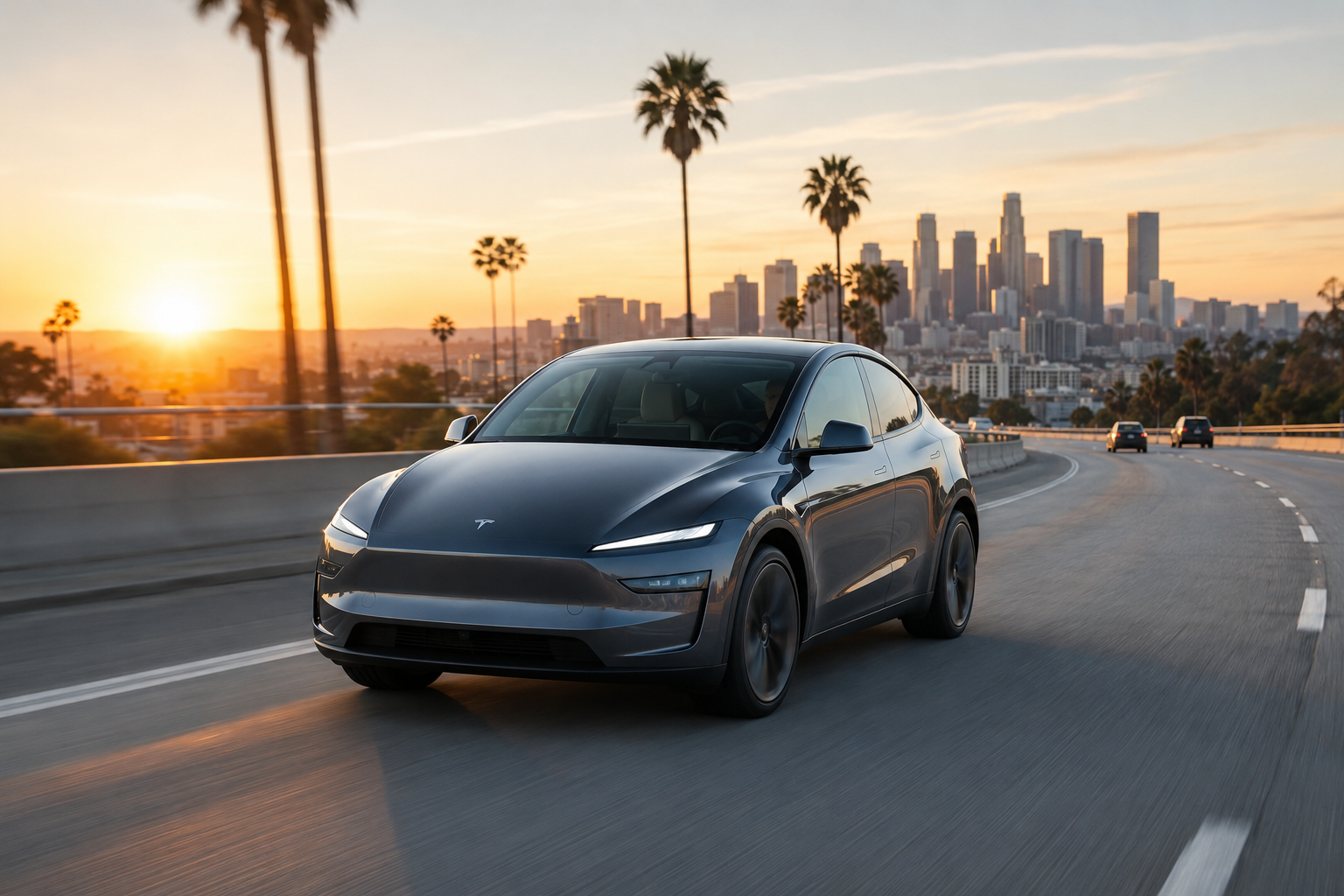
Tesla Didn't Just Beat Expectations—It Challenged the Market Narrative
For much of the past year, the conversation surrounding Tesla has been dominated by uncertainty.
Growing competition from established automakers and emerging EV brands, fluctuating interest rates, changing consumer demand, and repeated discussions about slowing electric vehicle adoption all contributed to a cautious outlook.
Many analysts entered the second quarter expecting another difficult period for Tesla.
Instead, the company delivered results that exceeded many market forecasts.
The numbers themselves attracted headlines.
However, the more interesting story lies beneath them.
The important question isn't simply how many vehicles Tesla delivered.
It's why expectations proved too pessimistic in the first place.
Understanding that difference provides valuable insight into Tesla's business model—and perhaps even the future direction of the global EV industry.
Looking Beyond Delivery Numbers
Quarterly deliveries often become the primary metric investors use to judge Tesla's performance.
While delivery volume is undeniably important, it tells only part of the story.
A higher delivery figure doesn't automatically mean demand has fully recovered.
Likewise, a weaker quarter doesn't necessarily indicate a long-term decline.
Vehicle deliveries reflect the interaction of multiple factors, including:
- Manufacturing efficiency
- Supply chain stability
- Consumer financing
- Regional demand
- Inventory management
- Production scheduling
Viewed in isolation, delivery numbers can easily be misunderstood.
Viewed within the broader business context, they become much more meaningful.
Why Expectations Were Lower Than Reality
Markets rarely react only to facts.
They react to expectations.
Before Tesla released its Q2 figures, many investors had already adjusted their forecasts downward.
Several concerns influenced sentiment:
- Continued price competition within the EV industry.
- Economic uncertainty affecting consumer spending.
- Higher borrowing costs in several major markets.
- Slowing growth rates compared with previous years.
- Increasing competition from both traditional manufacturers and newer EV brands.
None of these concerns disappeared overnight.
Yet Tesla still exceeded many analysts' projections.
This illustrates an important principle in financial markets:
Companies don't need perfect results to outperform.
They simply need results that are better than expected.
Driver One: Manufacturing Has Become More Predictable
Several years ago, Tesla's greatest challenge wasn't demand.
It was production.
New factories required time to reach full efficiency.
Supply chains remained vulnerable.
Global logistics frequently disrupted deliveries.
Today, Tesla's manufacturing network is considerably more mature.
Facilities in Shanghai, Berlin, Fremont, and Texas have accumulated years of production experience.
That maturity produces several advantages:
- More consistent output.
- Better quality control.
- Improved production planning.
- Faster response to regional demand.
- Reduced manufacturing bottlenecks.
Rather than constantly solving startup challenges, Tesla can increasingly focus on optimizing existing operations.
This stability makes quarterly delivery performance more resilient than in previous years.
Efficiency Often Matters More Than Capacity
A common misconception is that increasing production always requires building larger factories.
In reality, significant improvements often come from making existing factories more efficient.
Small engineering refinements can produce meaningful gains over time.
Examples include:
- Faster assembly processes.
- Improved automation.
- Better inventory coordination.
- Reduced downtime.
- More efficient logistics.
Individually, each improvement may appear modest.
Together, they enable thousands of additional vehicles to be produced without constructing entirely new facilities.
Tesla has consistently emphasized manufacturing efficiency as a competitive advantage.
That philosophy helps explain why production continues improving even when factory footprints remain largely unchanged.
Stable Production Builds Customer Confidence
Reliable manufacturing affects more than factory statistics.
It also influences purchasing decisions.
Consumers are generally more willing to place orders when delivery timelines are predictable.
Businesses purchasing fleet vehicles likewise value dependable production schedules.
As manufacturing becomes increasingly stable, Tesla strengthens its reputation for execution rather than simply innovation.
That reliability may not generate dramatic headlines, but it plays an important role in supporting long-term delivery growth.
Demand Is Becoming More Nuanced
One of the biggest misconceptions surrounding Tesla is the assumption that vehicle demand depends almost entirely on pricing.
Price certainly matters.
But today's EV buyers evaluate a much broader set of factors.
Many consumers compare:
- Monthly financing costs.
- Charging convenience.
- Software capabilities.
- Operating expenses.
- Maintenance costs.
- Resale value.
- Access to charging infrastructure.
Viewed this way, purchasing decisions become less about the sticker price alone and more about the overall ownership experience.
This broader perspective helps explain why Tesla continues attracting buyers even in an increasingly competitive marketplace.
Deliveries Reflect Operational Strength, Not Just Consumer Interest
It's tempting to interpret strong deliveries as proof that demand has fully rebounded.
Reality is more complex.
Deliveries represent the successful coordination of manufacturing, logistics, inventory management, financing, and customer fulfillment.
When these systems operate efficiently together, quarterly results naturally improve.
Tesla's Q2 performance therefore reflects operational execution as much as consumer demand.
Understanding this distinction is essential when evaluating the company's long-term trajectory.
Driver Two: Financing Is Becoming More Important Than Discounts
Whenever Tesla reports stronger deliveries, public discussion often centers on pricing.
Many assume that lower prices automatically translate into higher sales.
Price reductions certainly influence purchasing decisions, but they are no longer the only—or even the primary—factor for many buyers.
Today's consumers increasingly think in terms of monthly affordability rather than total purchase price.
For someone financing a vehicle over five or six years, questions such as these often matter more:
- What will my monthly payment be?
- Are low-interest financing options available?
- How much can I save on fuel each month?
- What are the expected maintenance costs?
A vehicle priced slightly higher can still become the more attractive option if financing terms are favorable and operating expenses remain low.
This shift changes how consumers evaluate value.
Instead of comparing vehicle prices alone, they compare the total financial commitment over several years.
Tesla has gradually adapted to this reality by expanding financing and leasing options in key markets.
These initiatives lower the barrier to entry without relying solely on permanent price reductions.
Buyers Are Calculating Total Cost of Ownership
The electric vehicle market has matured considerably.
Early adopters often purchased EVs because they were interested in new technology or environmental sustainability.
Today's mainstream buyers approach the decision more pragmatically.
They ask a different question:
"How much will this vehicle cost me over the next five years?"
That calculation typically includes:
- Purchase price
- Loan interest
- Electricity versus fuel expenses
- Scheduled maintenance
- Insurance
- Estimated resale value
When viewed from this broader perspective, Tesla often remains highly competitive.
This helps explain why demand can remain resilient even in markets where price competition has intensified.
Driver Three: Tesla Is Selling an Ecosystem, Not Just a Vehicle
Another reason Tesla continues attracting buyers lies beyond manufacturing and pricing.
Increasingly, customers are purchasing access to an integrated ecosystem rather than simply acquiring transportation.
That ecosystem includes:
- Over-the-air software updates
- Intelligent route planning
- Mobile app integration
- Continuous feature improvements
- The Supercharger network
- Energy management capabilities
These elements work together to create an ownership experience that extends far beyond the first day of delivery.
Unlike traditional vehicles, a Tesla often continues evolving after purchase.
Software updates may improve navigation, refine driving behavior, optimize battery performance, or introduce entirely new features.
This continuous improvement changes how buyers perceive long-term value.
Instead of asking, "What features does this vehicle have today?" consumers increasingly ask, "How will this vehicle improve over the coming years?"
Ownership Experience Has Become a Competitive Advantage
Specification sheets remain useful.
They compare acceleration, battery capacity, cargo space, and driving range.
However, they rarely capture what daily ownership actually feels like.
Many Tesla owners point to factors that are difficult to quantify:
- Seamless charging on long road trips.
- Reliable mobile app functionality.
- Regular software enhancements.
- Integrated navigation with charging stops.
- Consistent user interface across the vehicle.
These experiences shape customer satisfaction over months and years of ownership.
As the EV market becomes more competitive, user experience may prove just as important as hardware specifications.
This is an area where Tesla has invested continuously.
Driver Four: Expectations Were Simply Too Low
Perhaps the most overlooked reason behind Tesla's positive market reaction has little to do with manufacturing or demand.
It has to do with psychology.
Financial markets rarely reward companies for producing good results.
They reward companies for producing results that exceed expectations.
In the months leading up to Q2, investor sentiment had become increasingly cautious.
Concerns about slowing EV demand, aggressive competition, and macroeconomic uncertainty led many analysts to reduce their forecasts.
As expectations declined, the threshold for a positive surprise also declined.
When Tesla delivered stronger-than-anticipated numbers, the market reacted accordingly.
This illustrates a fundamental principle of investing:
Stock prices respond to surprises, not simply to performance.
A company can report lower year-over-year growth and still see its shares rise if the results exceed what investors had already anticipated.
Market Sentiment Can Change Faster Than Business Fundamentals
Business fundamentals tend to evolve gradually.
Manufacturing improvements take months.
New products require years of development.
Infrastructure expansion happens incrementally.
Investor sentiment, however, can shift within hours.
One quarterly report, one earnings call, or one unexpected operational result can dramatically alter market expectations.
Tesla has experienced this pattern repeatedly throughout its history.
Periods of excessive optimism have often been followed by excessive pessimism—and vice versa.
Understanding this dynamic helps explain why quarterly delivery reports often generate outsized reactions relative to the underlying operational changes.
Strong Deliveries Don't Automatically Mean Every Challenge Has Been Solved
While Tesla's Q2 performance exceeded expectations, it would be inaccurate to conclude that every obstacle has disappeared.
The company continues facing important challenges, including:
- Intensifying global EV competition.
- Regional differences in consumer demand.
- Economic uncertainty in key markets.
- Regulatory developments.
- Continued pressure to innovate.
Strong deliveries should therefore be viewed as evidence of resilience rather than proof that future growth is guaranteed.
The more meaningful takeaway is that Tesla continues demonstrating an ability to adapt under changing market conditions.
Why Q2 Matters Beyond the Delivery Numbers
Quarterly delivery reports often dominate financial headlines.
Yet focusing solely on the number of vehicles delivered can miss the broader picture.
Tesla's Q2 performance is significant not simply because deliveries exceeded forecasts, but because it demonstrated the company's ability to execute effectively in a market many believed was becoming increasingly difficult.
In recent years, Tesla has faced multiple challenges:
- Slower global EV demand growth.
- Intensifying competition from both established automakers and new entrants.
- Higher financing costs in many markets.
- Ongoing pressure to balance profitability with affordability.
Against that backdrop, outperforming expectations sends an important message.
It suggests Tesla remains operationally flexible and capable of adapting as market conditions evolve.
Tesla Is Becoming More Than a Car Company
Looking ahead, quarterly vehicle deliveries will remain an important metric.
However, they may become a smaller part of Tesla's overall growth story.
Over the past several years, Tesla has steadily expanded beyond automobile manufacturing.
Today, the company's long-term strategy increasingly includes:
- Artificial intelligence.
- Full Self-Driving (Supervised).
- Energy storage solutions.
- Charging infrastructure.
- Software services.
- Robotics.
- AI training infrastructure.
These businesses reinforce one another.
For example, every vehicle delivered contributes additional real-world driving data, helping improve Tesla's AI systems.
Improved AI enhances future software capabilities.
Better software strengthens the ownership experience.
A stronger ownership experience supports future vehicle demand.
Rather than operating as separate businesses, these technologies form an interconnected ecosystem.
Why Software Is Becoming a Long-Term Growth Driver
Traditional automotive companies generate most of their revenue when a vehicle is sold.
Tesla's relationship with customers often continues long after delivery.
Software updates can introduce:
- Navigation improvements.
- Enhanced energy management.
- New entertainment features.
- Driving assistance refinements.
- User interface enhancements.
In addition, services such as Full Self-Driving (Supervised) create opportunities for recurring software-related revenue.
This approach shifts part of Tesla's business model from one-time hardware sales toward ongoing software value.
For investors, that distinction is increasingly important.
Companies capable of generating long-term customer engagement often enjoy stronger competitive positioning than those relying solely on initial product sales.
Operational Discipline May Become Tesla's Greatest Strength
Innovation attracts attention.
Operational excellence sustains growth.
Tesla's Q2 performance illustrates this difference.
Building an innovative electric vehicle is difficult.
Building hundreds of thousands of vehicles consistently, delivering them efficiently across multiple continents, and maintaining software support throughout ownership is considerably more challenging.
The company's expanding manufacturing experience, logistics capabilities, and supply chain coordination suggest Tesla is becoming increasingly proficient at large-scale execution.
These improvements rarely generate the excitement associated with new product announcements, yet they often have a greater impact on long-term business performance.
What Investors Should Watch Next
Although Q2 exceeded expectations, future performance will depend on several key developments.
1. AI and Full Self-Driving
Tesla continues investing heavily in artificial intelligence.
Future software improvements may become an increasingly important differentiator as autonomous driving capabilities evolve.
2. Energy Storage Growth
Tesla's energy business—including Megapack and Powerwall products—has become one of the company's fastest-growing segments.
Continued expansion could reduce Tesla's dependence on vehicle deliveries alone.
3. Manufacturing Efficiency
Rather than focusing exclusively on building new factories, investors should monitor how efficiently Tesla continues improving production at its existing facilities.
Incremental manufacturing gains often produce meaningful financial benefits over time.
4. Global Market Expansion
Demand varies significantly across regions.
Tesla's ability to adapt pricing, financing, production, and distribution strategies for local markets will remain an important competitive advantage.
Strong Deliveries Do Not Eliminate Future Risks
While Q2 demonstrated resilience, several uncertainties remain.
These include:
- Continued price competition across the EV industry.
- Economic conditions affecting consumer purchasing decisions.
- Regional regulatory changes.
- Rapid technological advances from competing manufacturers.
- The pace of AI and autonomous driving adoption.
Success in one quarter should therefore be viewed as encouraging—not conclusive.
Long-term leadership will depend on Tesla's ability to continue innovating while maintaining operational discipline.
Frequently Asked Questions
Why did Tesla's Q2 deliveries exceed expectations?
Several factors contributed, including improved manufacturing stability, efficient supply chain execution, attractive financing options in key markets, and stronger-than-expected operational performance. Investor expectations had also become relatively conservative, making positive surprises more impactful.
Does stronger Q2 performance mean EV demand has fully recovered?
Not necessarily.
Demand varies by region and economic conditions. Strong deliveries indicate resilience and effective execution, but they do not guarantee that every market has returned to sustained growth.
Are price cuts still Tesla's primary sales strategy?
Pricing remains important, but buyers increasingly evaluate total ownership costs, financing availability, software capabilities, charging infrastructure, and long-term ownership experience rather than purchase price alone.
Why do investors react so strongly to quarterly deliveries?
Delivery reports provide one of the earliest indicators of Tesla's operational performance each quarter.
More importantly, markets compare actual results with expectations.
Even modest improvements can trigger significant investor reactions if forecasts had been particularly cautious.
What should investors monitor after Q2?
Beyond future delivery numbers, attention will likely focus on AI development, Full Self-Driving progress, energy storage expansion, manufacturing efficiency, and Tesla's ability to diversify revenue beyond vehicle sales.
Final Thoughts
Tesla's stronger-than-expected Q2 deliveries demonstrate more than healthy vehicle demand.
They highlight a company that continues refining the operational systems behind its business.
Manufacturing efficiency, logistics coordination, software integration, financing strategies, and customer experience all contributed to the quarter's performance.
Perhaps the most important lesson from Q2 is that Tesla's competitive advantage is becoming increasingly multidimensional.
The company is no longer competing solely on vehicle specifications or production volume.
Instead, it combines hardware, software, artificial intelligence, charging infrastructure, and energy solutions into a unified ecosystem.
That integrated approach may prove increasingly valuable as the global EV market becomes more competitive.
Quarterly delivery numbers will continue attracting headlines.
However, the deeper story lies in Tesla's ability to improve every layer of its business simultaneously—from factory operations and supply chains to software updates and AI development.
Whether future quarters exceed expectations or not, Tesla's long-term success is likely to depend less on any single delivery report and more on its capacity to continuously optimize the entire ownership experience.
Key Takeaways
- Tesla's Q2 deliveries exceeded expectations because of a combination of manufacturing maturity, operational efficiency, financing strategies, and stronger execution—not a single factor.
- Market expectations play a crucial role in investor reactions; outperforming forecasts can be as important as absolute delivery numbers.
- Tesla's competitive edge increasingly comes from its integrated ecosystem of vehicles, software, AI, charging infrastructure, and energy products.
- Operational excellence is becoming just as important as technological innovation for sustaining long-term growth.
- Future performance will depend not only on vehicle deliveries but also on advancements in AI, energy storage, software services, and manufacturing efficiency.


Comments
Post a Comment