Why the Tesla Model Y Could Become the Most Profitable SUV Ever Built
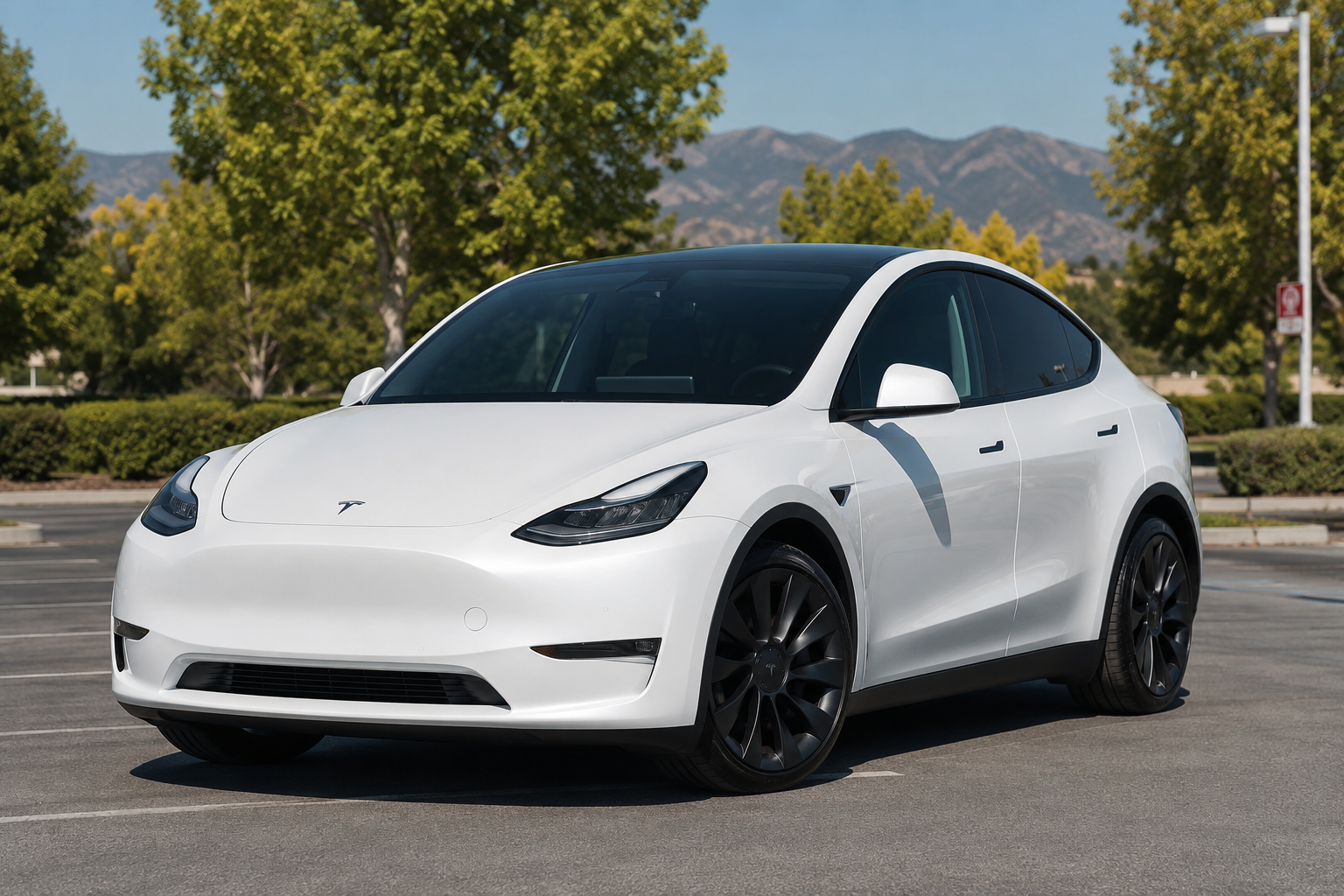
The Model Y's Greatest Achievement Isn't Sales—It's Profitability
The Tesla Model Y has earned global recognition for becoming one of the world's best-selling vehicles.
Sales records naturally attract attention.
Large delivery numbers make headlines.
Yet focusing only on sales volume overlooks what may be the Model Y's most remarkable achievement.
Its ability to generate profit.
Selling millions of vehicles is impressive.
Selling millions of vehicles while maintaining healthy margins in one of the world's most competitive industries is far more difficult.
This distinction explains why investors continue paying close attention to the Model Y even as Tesla expands into artificial intelligence, autonomous driving, robotics, and energy storage.
The Model Y is no longer just another electric SUV.
It has become the financial foundation that supports many of Tesla's future ambitions.
Most Automakers Compete on Products. Tesla Competes on Systems.
Traditional automotive competition usually revolves around visible improvements.
Manufacturers promote:
- Longer driving range.
- Faster acceleration.
- Larger touchscreens.
- Luxury interiors.
- Additional convenience features.
These upgrades certainly influence purchasing decisions.
However, they rarely determine long-term profitability.
Tesla approaches competition differently.
Instead of optimizing only the finished product, it continually redesigns the entire system that produces, delivers, and supports the vehicle.
That system includes:
- Manufacturing.
- Supply chain management.
- Software.
- Battery engineering.
- Charging infrastructure.
- Artificial intelligence.
- Customer ownership experience.
The result is a business designed not simply to sell vehicles efficiently, but to improve profitability at nearly every stage of the product lifecycle.
Manufacturing Efficiency Creates Invisible Competitive Advantages
Consumers usually notice the finished vehicle.
Investors often pay greater attention to how that vehicle is built.
Tesla has spent years simplifying manufacturing rather than simply increasing production volume.
Major engineering innovations—including large structural castings, simplified body construction, highly automated assembly lines, and continuous factory optimization—have gradually reduced complexity throughout production.
Fewer components generally mean:
- Fewer manufacturing steps.
- Less assembly time.
- Reduced logistics requirements.
- Lower inventory costs.
- Improved production consistency.
Individually, each improvement may appear relatively small.
Collectively, they create significant cost advantages that become increasingly meaningful as production scales.
This manufacturing philosophy allows Tesla to improve profitability without relying solely on higher selling prices.
Scale Improves More Than Production
Economies of scale are often misunderstood.
Many people assume scale simply means building more vehicles.
In reality, scale improves almost every aspect of the business.
As Model Y production expanded globally, Tesla gained opportunities to optimize:
- Supplier relationships.
- Battery sourcing.
- Factory utilization.
- Transportation efficiency.
- Quality control.
- Software deployment.
Each additional improvement contributes incremental savings.
Over hundreds of thousands—or even millions—of vehicles, those savings compound into a substantial competitive advantage.
This is one reason why Tesla can continue investing heavily in future technologies while remaining competitive in pricing.
Profitability Is Built Before the Vehicle Leaves the Factory
A common misconception is that profitability is determined when customers purchase a vehicle.
In reality, much of the financial outcome has already been decided long before the car reaches the showroom.
Factory design.
Supply chain efficiency.
Manufacturing automation.
Engineering simplification.
These decisions influence production costs long before revenue is recognized.
Tesla's strategy reflects this philosophy.
Rather than relying primarily on aggressive marketing or dealer incentives, the company focuses on lowering the cost of producing each vehicle while maintaining product quality.
This creates flexibility.
Tesla can choose to protect margins, reduce prices, or invest additional resources into future innovation.
That strategic flexibility becomes increasingly valuable during periods of market uncertainty.
The Model Y Is Becoming a Platform, Not Just a Product
Perhaps the biggest misconception surrounding the Model Y is viewing it solely as a vehicle.
Increasingly, it functions as a technology platform.
The hardware provides the foundation.
Software continuously expands its capabilities.
Artificial intelligence improves driving assistance.
Charging infrastructure enhances convenience.
Future autonomous services may unlock entirely new business opportunities.
Instead of reaching the end of its value at the moment of sale, the Model Y continues evolving throughout its operational life.
This ongoing relationship between vehicle, software, and owner distinguishes Tesla from many traditional automotive business models.
Software May Become the Model Y's Largest Profit Engine
For decades, the automotive industry followed a simple business model.
A manufacturer designed a vehicle, sold it, and moved on to the next customer.
Most of the revenue was generated at the point of sale.
After that, interaction between the automaker and the owner became relatively limited.
Tesla has gradually redefined this relationship.
The purchase of a Model Y is no longer the end of the customer journey.
In many ways, it is the beginning.
Through over-the-air updates, connected services, and artificial intelligence, the vehicle continues evolving long after it leaves the factory.
This ongoing relationship changes both the ownership experience and the economics of the business.
Every Software Update Extends the Vehicle's Value
Unlike traditional vehicles, the Model Y is designed to improve over time.
Tesla regularly delivers software updates that can enhance:
- Navigation and route planning.
- Energy efficiency.
- User interface responsiveness.
- Driver assistance features.
- Entertainment options.
- Charging optimization.
Some improvements are small.
Others introduce capabilities that did not exist when the customer first purchased the vehicle.
This creates a different ownership experience.
Instead of feeling outdated after several years, the vehicle can continue receiving meaningful enhancements throughout its lifecycle.
From a business perspective, this also increases customer satisfaction and strengthens long-term brand loyalty.
Lifetime Value Matters More Than Purchase Price
Many consumers compare vehicles based on their initial purchase price.
Businesses, however, often evaluate customers differently.
They focus on Lifetime Value (LTV)—the total value a customer generates over many years.
Tesla's ecosystem naturally supports this approach.
A Model Y owner may eventually purchase:
- Full Self-Driving (Supervised), where available.
- Premium Connectivity services.
- Home charging equipment.
- Energy storage products such as Powerwall.
- Future mobility services.
- Additional Tesla vehicles.
Instead of relying on a single transaction, Tesla has opportunities to build an ongoing relationship with each customer.
That makes every vehicle more valuable than its original selling price alone would suggest.
The Ecosystem Creates Compounding Advantages
One of Tesla's greatest strengths is that its products are designed to work together.
Consider a typical ownership journey.
A customer purchases a Model Y.
They install a home charger for convenient overnight charging.
Later, they add solar panels or battery storage to reduce electricity costs.
They manage everything through the Tesla app.
Future software updates continue improving the vehicle.
Each additional product makes the ecosystem more useful.
Leaving the ecosystem becomes less attractive because the products complement one another.
This creates a compounding effect.
Rather than competing through individual products, Tesla strengthens customer relationships through an integrated experience.
Data Is Becoming an Asset
Modern vehicles generate an extraordinary amount of operational data.
Every drive contributes information about:
- Road conditions.
- Energy consumption.
- Charging behavior.
- Navigation patterns.
- Driver interactions.
- Vehicle performance.
When managed responsibly and with appropriate privacy protections, aggregated fleet data can help improve software, optimize charging strategies, and refine future vehicle development.
For Tesla, this creates a continuous feedback loop.
More vehicles generate more data.
More data improves software.
Better software enhances the ownership experience.
A stronger ownership experience attracts more customers.
This cycle becomes increasingly powerful as the fleet grows.
Robotaxi Could Unlock an Entirely New Revenue Model
Perhaps the most intriguing long-term possibility is how the Model Y could participate in autonomous mobility.
If autonomous driving technology and regulatory frameworks continue advancing, compatible vehicles could eventually support Robotaxi services in approved markets.
Under that scenario, a Model Y would no longer function solely as personal transportation.
It could also become part of a broader mobility network.
This concept changes how investors think about each vehicle.
Instead of generating value only once at the time of sale, the same asset could contribute to ongoing service revenue throughout its operational life.
Whether this vision develops exactly as planned remains uncertain.
However, it illustrates why many analysts increasingly evaluate Tesla through the lens of platform economics rather than traditional automotive manufacturing.
Competitors Can Copy the Vehicle—But Not the System
Automotive design can be replicated.
Battery technology continues advancing across the industry.
Interior layouts, display designs, and performance specifications inevitably become more similar over time.
What is far more difficult to duplicate is an integrated business system.
Tesla combines:
- Vehicle engineering.
- Manufacturing.
- Software development.
- Artificial intelligence.
- Charging infrastructure.
- Mobile applications.
- Energy products.
Each component reinforces the others.
Building one competitive SUV is achievable.
Building an ecosystem where every product strengthens the next requires years of coordinated investment.
That systems-level integration may prove to be Tesla's most durable competitive advantage.
Profitability Improves Through Continuous Optimization
Many people associate higher profits with higher prices.
Tesla increasingly demonstrates a different approach.
Profitability can improve through:
- Simpler manufacturing.
- Better software.
- Efficient logistics.
- Faster production.
- Stronger customer retention.
- Higher lifetime value.
These improvements may appear incremental individually.
Together, they create a business capable of generating greater value without depending solely on price increases.
This philosophy has become central to Tesla's long-term strategy.
Why the Model Y May Define Tesla's Future More Than Any New Product
Tesla frequently attracts headlines for ambitious projects.
Robotaxi.
Humanoid robots.
Artificial intelligence.
Energy storage.
Each has the potential to reshape an industry.
Yet despite these innovations, the Model Y remains one of Tesla's most strategically important products.
Not because it is the newest vehicle.
But because it connects nearly every part of Tesla's business.
Every Model Y delivered strengthens the company's ecosystem.
It expands the installed hardware base.
It increases software adoption opportunities.
It contributes driving data that improves AI models.
It supports charging network utilization.
And it creates potential demand for Tesla's broader energy products.
In this sense, the Model Y is no longer simply a successful SUV.
It is the foundation upon which several future businesses can continue growing.
The Most Valuable Vehicles Continue Creating Value After Delivery
Historically, the automotive industry measured success by one simple metric:
Vehicles sold.
Once a car left the dealership, the manufacturer had relatively few opportunities to increase its economic value.
Tesla's approach is fundamentally different.
A delivered Model Y continues interacting with Tesla's ecosystem throughout its lifetime.
Over the years, owners may receive:
- New software capabilities.
- Navigation improvements.
- Battery optimization updates.
- Enhanced driver-assistance features.
- Additional connected services.
At the same time, Tesla gains valuable operational insights that help improve future products.
This ongoing relationship transforms the vehicle from a one-time purchase into a long-term platform for continuous improvement.
That evolution has significant implications for profitability.
Manufacturing Excellence Creates Long-Term Pricing Flexibility
The automotive industry is highly cyclical.
Consumer demand rises and falls.
Raw material costs fluctuate.
Economic conditions change.
Companies with high production costs often have limited flexibility during difficult market conditions.
Tesla's focus on manufacturing efficiency helps create a different position.
Lower production costs provide more strategic options.
The company can:
- Maintain healthier margins.
- Reduce prices when necessary.
- Increase investment in future technologies.
- Respond more quickly to competitive pressure.
This flexibility becomes especially valuable in periods of industry-wide uncertainty.
Rather than relying on a single strategy, Tesla can adapt while continuing to strengthen its long-term competitive position.
The Greatest Competitive Advantage Is Learning Faster
One of the least visible aspects of Tesla's business is its ability to learn continuously.
Every factory improvement contributes to future production.
Every software update generates customer feedback.
Every vehicle adds operational data.
Every engineering refinement influences the next generation of products.
Over time, these incremental improvements compound.
Competitors may successfully replicate individual technologies.
They may develop comparable battery chemistry.
They may introduce similar vehicle designs.
They may even match specific performance figures.
Replicating an organization's accumulated learning process is far more difficult.
Continuous learning has become one of Tesla's strongest strategic assets.
What Could Limit the Model Y's Long-Term Profitability?
Despite its success, the Model Y does not operate without challenges.
Several factors could influence future profitability.
Increasing Competition
Nearly every major automaker now offers electric SUVs.
As product quality improves across the industry, Tesla must continue differentiating itself through software, manufacturing efficiency, and customer experience rather than specifications alone.
Technology Expectations Continue Rising
Consumers increasingly expect vehicles to improve through software.
Maintaining leadership requires ongoing investment in artificial intelligence, connectivity, and digital services.
Innovation must remain continuous.
Global Economic Conditions
Interest rates, financing availability, and consumer confidence continue affecting vehicle purchasing decisions.
Even highly efficient manufacturers remain exposed to broader economic cycles.
Regulatory Changes
Policies affecting autonomous driving, battery production, trade, and environmental standards may influence both costs and future business opportunities.
Tesla's ability to adapt quickly will remain an important advantage.
What Investors Should Watch Over the Next Five Years
Rather than focusing solely on quarterly sales figures, long-term investors may gain deeper insight by monitoring several structural indicators.
1. Manufacturing Cost Per Vehicle
Can Tesla continue lowering production costs while maintaining quality?
Sustained efficiency improvements may matter more than headline delivery numbers.
2. Software Adoption
How many owners continue purchasing software-based services?
Growth in recurring digital revenue would demonstrate that Tesla's ecosystem strategy is working.
3. AI Integration
Does artificial intelligence continue improving safety, energy efficiency, manufacturing, and customer experience?
The broader the application of AI, the greater its long-term business impact.
4. Energy Ecosystem Expansion
Will more Model Y owners adopt Tesla Energy products such as home battery storage or solar solutions?
Greater ecosystem adoption increases customer lifetime value.
5. Robotaxi Readiness
As autonomous technology and regulations evolve, could existing Model Y vehicles support future mobility services?
If so, each vehicle may become more valuable over time rather than simply depreciating like a traditional automobile.
Frequently Asked Questions
Why is the Tesla Model Y considered so profitable?
The Model Y combines efficient manufacturing, strong global demand, software integration, and access to Tesla's broader ecosystem. These factors help improve margins while creating opportunities for long-term customer value beyond the initial vehicle sale.
Is the Model Y more important than Tesla's future AI projects?
Both are closely connected.
The Model Y provides the hardware platform and real-world driving data that support Tesla's AI development, while advances in AI improve the ownership experience of the vehicle itself.
How does software increase the Model Y's profitability?
Software enables continuous feature improvements, strengthens customer engagement, and creates opportunities for recurring revenue through connected services and future digital capabilities.
Can competitors build similar electric SUVs?
Yes.
Many manufacturers now produce highly competitive electric SUVs.
What is more difficult to replicate is Tesla's combination of manufacturing efficiency, software development, charging infrastructure, artificial intelligence, and integrated customer ecosystem.
Why do investors pay so much attention to the Model Y?
Beyond being a high-volume vehicle, the Model Y serves as the foundation for multiple long-term businesses, including software, AI, charging infrastructure, energy products, and potentially autonomous mobility services.
Final Thoughts
The Tesla Model Y has already established itself as one of the world's most successful electric vehicles.
Its greater significance, however, lies beyond sales rankings.
The Model Y demonstrates how the automotive industry is evolving from a business centered on manufacturing products to one increasingly defined by software, connected services, artificial intelligence, and integrated ecosystems.
Rather than maximizing value at the moment of purchase, Tesla seeks to extend the economic life of every vehicle through continuous innovation and customer engagement.
This strategy reflects a broader transformation taking place across the mobility industry.
Future competitive advantage will depend not only on designing better vehicles, but also on building systems that continue creating value long after delivery.
Whether the Model Y ultimately becomes the most profitable SUV in automotive history will depend on many factors, including competition, regulation, and technological progress.
Yet one conclusion already appears well supported:
Its success is not simply the result of building a popular electric SUV.
It is the result of integrating manufacturing excellence, software innovation, artificial intelligence, and ecosystem thinking into a single product platform.
That combination may prove far more difficult to replicate than the vehicle itself.
Key Takeaways
The Model Y's long-term profitability comes from an integrated business system rather than vehicle sales alone.
Manufacturing efficiency provides Tesla with greater pricing flexibility and stronger margins.
Software, AI, and connected services extend the economic value of every vehicle throughout its lifecycle.
The Model Y functions as a platform supporting Tesla's broader ecosystem, including energy products, charging infrastructure, and future autonomous mobility.
Tesla's most durable competitive advantage may be its ability to continuously improve every part of the system—from factories and software to customer experience and AI—rather than relying on any single innovation.


Comments
Post a Comment