Tesla Model Y L Shows That Efficiency—not Bigger Batteries—May Define the Next Generation of Electric SUVs

For years, electric vehicle manufacturers competed primarily by offering larger batteries and longer advertised driving ranges. The prevailing assumption was simple: more battery capacity meant a better electric vehicle.
Tesla's latest developments surrounding the Model Y L suggest that this philosophy is changing. Rather than relying solely on additional battery capacity, Tesla appears to be pursuing a more balanced engineering strategy that focuses on extracting greater efficiency from every kilowatt-hour of stored energy.
Recent information released around the Model Y L indicates that the vehicle delivers notable improvements in energy efficiency despite featuring a longer wheelbase and a larger body. This represents an important shift in Tesla's product development priorities and provides insight into how future electric SUVs may be designed.
Instead of viewing efficiency as merely a specification on a technical sheet, Tesla increasingly treats it as a system-level engineering challenge involving aerodynamics, drivetrain optimization, thermal management, vehicle software, weight reduction, and intelligent energy management.
For consumers, this means longer usable driving range, lower charging costs, and improved everyday ownership without necessarily increasing vehicle size or battery weight.
What Happened?
Tesla recently revealed additional technical information about the upcoming Model Y L, highlighting that the long-wheelbase variant achieves better efficiency than many observers initially expected.
Because the Model Y L is physically larger and designed to accommodate additional interior space, industry analysts originally assumed that energy consumption would increase proportionally.
Instead, available specifications suggest Tesla has successfully minimized much of the efficiency penalty normally associated with larger SUVs.
Although Tesla has not publicly disclosed every engineering detail, the company's history of continuous vehicle optimization provides several clues regarding how these gains were likely achieved.
Rather than making batteries dramatically larger, Tesla appears focused on ensuring that every watt of stored energy is used more effectively.
Why Efficiency Has Become Tesla's New Competitive Advantage
Battery technology remains one of the most expensive components in any electric vehicle. Increasing battery size typically raises manufacturing costs, vehicle weight, charging time, and raw material requirements.
Improving efficiency offers a different path toward longer driving range. If engineers can reduce the amount of energy required to travel each mile, drivers effectively receive more usable range without carrying additional battery mass.
This approach also improves sustainability by reducing material consumption while maintaining competitive vehicle performance.
Industry analysts increasingly view efficiency as one of the most important long-term competitive advantages in the EV market because it benefits manufacturers and consumers simultaneously.
Every improvement in aerodynamic efficiency, motor performance, software intelligence, and thermal management compounds across the entire vehicle. Small gains in multiple systems often produce larger real-world benefits than increasing battery size alone.
How Tesla Likely Improved Model Y L Efficiency
1. Aerodynamic Optimization
Tesla has consistently invested in reducing aerodynamic drag across its vehicle lineup. Even small improvements to airflow around the front fascia, wheel design, underbody panels, and rear profile can meaningfully reduce highway energy consumption.
Because aerodynamic resistance increases exponentially at higher speeds, these refinements become increasingly valuable during long-distance travel.
2. Advanced Powertrain Calibration
Modern electric motors already operate at exceptionally high efficiency levels. However, Tesla continues refining motor control software, inverter performance, regenerative braking algorithms, and torque management to reduce energy losses under different driving conditions.
Software improvements can often increase real-world efficiency without requiring significant hardware changes, making over-the-air optimization one of Tesla's strongest competitive advantages.
Vehicle aerodynamics and software optimization play an increasingly important role in modern EV efficiency.
How Tesla Improved Model Y L Efficiency Without Sacrificing Space
One of the most interesting aspects of the newly announced Tesla Model Y L is not simply its additional seating capacity—it is how Tesla managed to preserve impressive efficiency despite creating a significantly larger vehicle.
Historically, three-row electric SUVs have faced a difficult engineering challenge. Extending wheelbase, adding structural reinforcement, increasing passenger capacity, and enlarging body panels almost always lead to heavier curb weight and lower driving range.
Tesla appears to have approached the Model Y L differently. Instead of relying solely on a larger battery pack, the company focused on improving overall vehicle efficiency through multiple engineering optimizations.
Electric vehicle range is determined by much more than battery capacity. Aerodynamics, rolling resistance, drivetrain efficiency, thermal management, regenerative braking, software optimization, and overall vehicle weight all contribute to real-world energy consumption.
Image: Tesla continues refining efficiency through software and hardware optimization.
Optimized Aerodynamics
Aerodynamic drag becomes increasingly important at highway speeds, where it represents the largest source of energy consumption for most electric vehicles.
Tesla has consistently refined body shapes across multiple vehicle generations. Even relatively small changes—including redesigned bumpers, smoother underbody panels, improved wheel designs, and revised airflow management—can collectively improve efficiency without requiring major structural redesigns.
Although the Model Y L features a longer body, careful aerodynamic tuning may offset part of the additional drag created by its increased dimensions.
Higher Efficiency Electric Motors
Tesla continues refining motor efficiency through incremental improvements in magnetic materials, inverter technology, cooling systems, and software calibration.
Rather than dramatically increasing motor output, engineers frequently focus on reducing energy loss during normal driving conditions.
These improvements are often invisible to drivers but can produce measurable gains over thousands of miles of ownership.
Advanced Battery Thermal Management
Battery temperature has a direct impact on charging speed, performance consistency, and energy efficiency.
Tesla's integrated heat pump system has already demonstrated significant improvements over earlier HVAC designs, particularly during cold weather operation.
If the Model Y L incorporates further refinements to coolant routing or battery temperature prediction algorithms, drivers could benefit from improved efficiency across a wider range of climates.
Software Continues Doing More of the Work
Tesla increasingly treats vehicle efficiency as a software problem as much as a hardware challenge.
Modern software can continuously optimize:
- Regenerative braking intensity
- Motor torque distribution
- Battery temperature
- Energy routing
- HVAC efficiency
- Navigation-based energy prediction
- Charging preconditioning
These software refinements frequently arrive through over-the-air updates, allowing Tesla vehicles to improve after delivery without requiring physical modifications.
How the Model Y L Could Influence the Global EV Market
The introduction of a longer-wheelbase Model Y represents more than an additional trim level. It reflects broader changes occurring throughout the global electric vehicle industry.
Consumer demand is shifting toward larger family-oriented electric SUVs, especially in markets where households expect greater passenger flexibility without moving into full-size luxury SUVs.
Automakers are increasingly expanding existing EV platforms into multiple body styles instead of creating entirely new vehicle architectures. This reduces development costs while addressing a broader range of customer needs.
Pressure on Competing Manufacturers
Tesla's ability to extend the Model Y platform without dramatically increasing complexity could encourage competing automakers to accelerate development of their own three-row electric SUVs.
Manufacturers such as Hyundai, Kia, Volkswagen, Ford, Rivian, and General Motors are all expanding their family-sized EV portfolios, making this segment one of the industry's fastest-growing categories.
Manufacturing Efficiency Remains a Competitive Advantage
Tesla's production strategy emphasizes shared platforms, simplified supply chains, giga-casting technology, and software-defined vehicle architecture.
Launching additional variants from an existing production platform allows Tesla to improve manufacturing flexibility while minimizing engineering costs compared with designing an entirely new model.
Image: Shared vehicle platforms help reduce production costs while expanding customer choice.
Future Outlook: What Comes Next for Tesla's Extended Model Y Strategy?
The Model Y L represents more than a single product launch—it signals Tesla's continued strategy of expanding its existing vehicle platforms rather than rapidly introducing entirely new models. This approach allows the company to address changing customer needs while maintaining manufacturing efficiency.
Industry analysts expect software-defined vehicles to play an increasingly important role in future Tesla products. Rather than differentiating vehicles solely through hardware, Tesla continues using over-the-air software updates, energy management improvements, driver assistance enhancements, and connectivity features to extend the lifecycle of each model.
As battery technology continues to evolve, future long-wheelbase Tesla vehicles may also benefit from higher energy-density battery cells, lighter structural materials, improved charging efficiency, and even greater manufacturing automation. These developments could allow larger electric SUVs to maintain competitive driving range while accommodating additional passengers and cargo.
Another important trend is regional product customization. Instead of offering identical vehicles worldwide, Tesla increasingly appears willing to tailor vehicle dimensions, seating layouts, and equipment packages to local consumer preferences. The Model Y L may become an example of this broader localization strategy.
- More regional Tesla variants designed for specific markets.
- Continued improvements in battery efficiency without dramatically increasing battery size.
- Greater use of software optimization to enhance driving range.
- Expansion of family-oriented electric SUVs worldwide.
- Manufacturing innovations reducing production costs while increasing model diversity.
Image: Future Tesla vehicles are expected to combine larger interiors with continued efficiency improvements.
Recommended Accessories for the Tesla Model Y L
A larger three-row SUV often carries more passengers, luggage, groceries, sports equipment, and family gear. Protecting the vehicle's interior becomes increasingly important as daily usage expands. Carefully selected accessories can help preserve the cabin while improving convenience during long-distance travel.
Wigoo Premium Accessories for Tesla Model Y Owners
Whether you currently own a Model Y, Model Y Juniper, or are planning to purchase the new Model Y L, Wigoo offers OEM-style accessories designed to enhance everyday usability while maintaining Tesla's minimalist interior design.
- Custom-fit Floor Mats — Protect carpets from dirt, mud, rain, and snow.
- Matte Tempered Glass Screen Protector — Reduces glare while resisting fingerprints and scratches.
- Roof Sunshade — Helps reduce cabin temperatures during summer driving.
- Center Console Storage Organizer — Maximizes storage space for daily essentials.
- Trunk Storage Solutions — Keep groceries, luggage, and travel equipment organized.
- Dashboard Covers — Protect interior materials from UV exposure.
- Seat Back Protectors — Especially useful for families with children using the third-row seating.
Because the Model Y L is expected to serve more family-oriented buyers, accessories focused on interior protection and cargo organization may become increasingly valuable over years of ownership.
Frequently Asked Questions
Is the Model Y L replacing the standard Model Y?
No. The Model Y L appears to expand Tesla's lineup by offering a larger, three-row alternative rather than replacing the existing Model Y. Availability may vary depending on region.
Will the longer wheelbase significantly reduce driving range?
Current information suggests Tesla has implemented multiple efficiency improvements to minimize the impact of the larger body size. Official EPA or local certification figures should provide the most accurate comparison once released.
Who is the Model Y L designed for?
The vehicle primarily targets families requiring additional seating capacity without moving into a full-size luxury SUV. It may also appeal to buyers needing greater cargo flexibility for travel or business use.
Will software updates continue improving vehicle efficiency?
Tesla has a long history of delivering over-the-air software updates that improve vehicle functionality, energy management, charging behavior, and driving experience. While future updates cannot be guaranteed, software remains one of Tesla's competitive strengths.
Which accessories should new Model Y owners purchase first?
Many owners prioritize floor mats, screen protectors, roof sunshades, storage organizers, and cargo accessories because they provide immediate protection and improve everyday convenience from the first day of ownership.
The Tesla Model Y L illustrates how the company continues refining an already successful platform instead of pursuing entirely new vehicle architectures. By combining a longer wheelbase, additional seating capacity, and engineering improvements focused on efficiency, Tesla aims to address the growing global demand for family-oriented electric SUVs.
Although final specifications, pricing, and regional availability will ultimately determine the Model Y L's commercial success, its development demonstrates Tesla's broader strategy of balancing manufacturing efficiency, software innovation, and practical customer needs. As competition intensifies across the electric SUV segment, the Model Y L may become an important benchmark for how automakers expand existing EV platforms while preserving efficiency and driving experience.
Recommended Upgrade: Wigoo OEM-Style Magnetic Phone Mount For Model YL
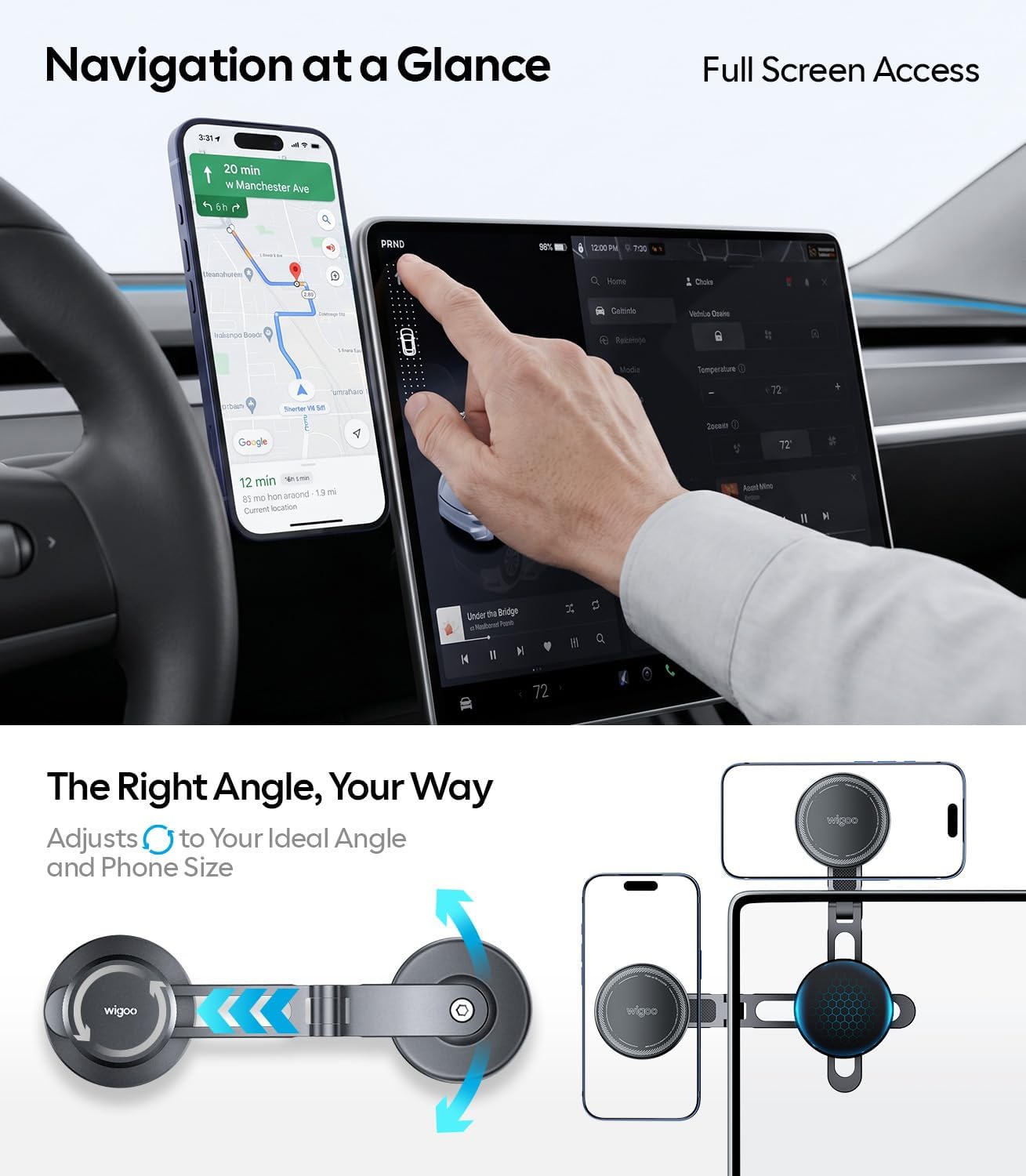
A larger cabin such as the Tesla Model Y L makes hands-free navigation even more important, especially for family road trips and daily commuting. While Tesla's center display handles most vehicle controls, many drivers still prefer keeping navigation apps, music, messaging, or charging information visible on their smartphone.
For owners looking for an OEM-inspired solution, the Wigoo OEM-Style Magnetic Phone Mount offers a clean installation that complements Tesla's minimalist interior instead of covering air vents or relying on adhesive pads. It is designed specifically for Tesla Model 3, Model Y, Model Y Juniper, Model S, and Model X. :contentReference[oaicite:0]{index=0}
- OEM-inspired appearance that blends naturally beside the center display.
- Powerful MagSafe-compatible magnetic attachment with an included magnetic ring for non-MagSafe phones.
- 360° rotation for portrait or landscape viewing while driving.
- Foldable hidden arm that keeps the dashboard uncluttered when not in use.
- No glue or permanent modification, allowing installation without damaging Tesla's interior trim.
- Compatible with iPhone 17–12 series and Android devices, making it suitable for most Tesla owners.
Unlike generic windshield or vent-mounted holders, this OEM-style design maintains a factory-like appearance while keeping the phone within easy reach for navigation and media controls. Community discussions among Tesla owners also show increasing interest in OEM-style magnetic mounts that preserve the clean look of the dashboard while offering flexible positioning. :contentReference[oaicite:5]{index=5}
Whether you're driving a Model 3, Model Y, the refreshed Model Y Juniper, or planning to upgrade to the new Model Y L, this accessory complements Tesla's software-focused driving experience without distracting from the central touchscreen.
Recommended Product:
Wigoo OEM-Style Magnetic Phone Mount for Tesla Model 3 / Model Y / Model Y Juniper / Model S / Model X
Learn More:
https://wigoostore.com/products/for-tesla-model-3-y-yl-x-s-phone-mount-oem-style-strongest-magnet-360-rotation-foldable-hidden-phone-holder-for-magsafe-iphone-17-12-series-tesla-model-y-model-3-accessories


Comments
Post a Comment